
Thin lawns, filled back in
Shade Lawn Repair & Overseeding in Atlanta, GA
Overseeding and repair for lawns thinned by tree shade, summer heat and foot traffic.
- We measure on site and hand you a written quote
- Fescue or bermuda picked for how much sun your yard gets and the month we spray
- Seeding, slope cover and silt fence from one call
Thickening Lawns Under the Canopy
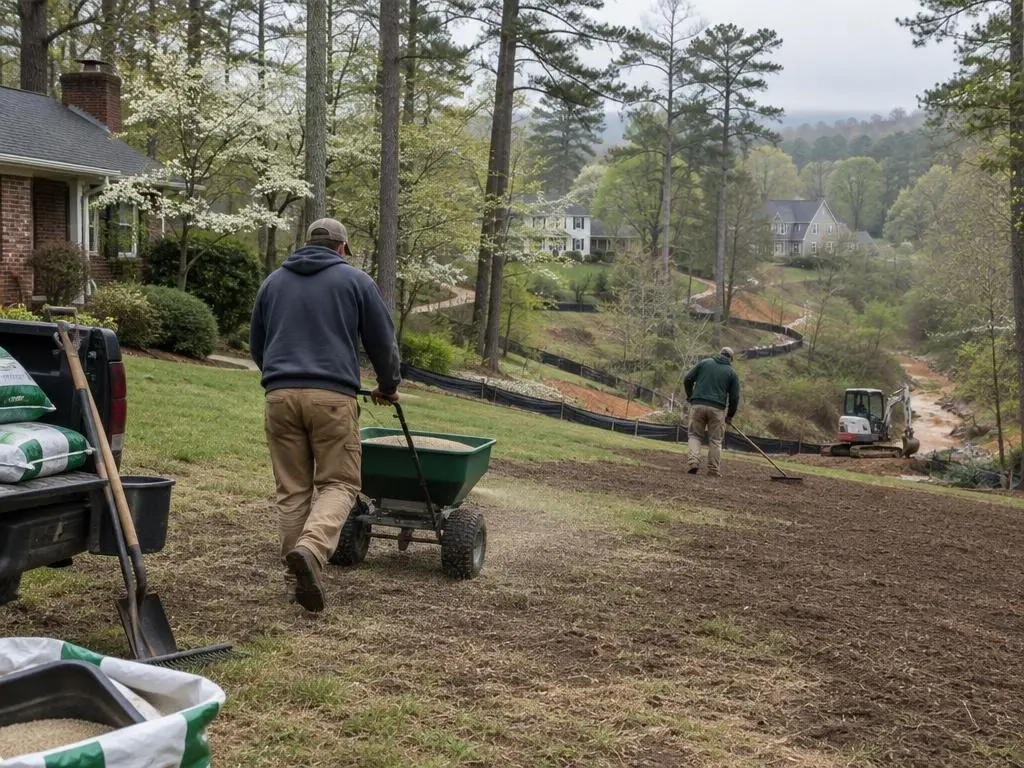
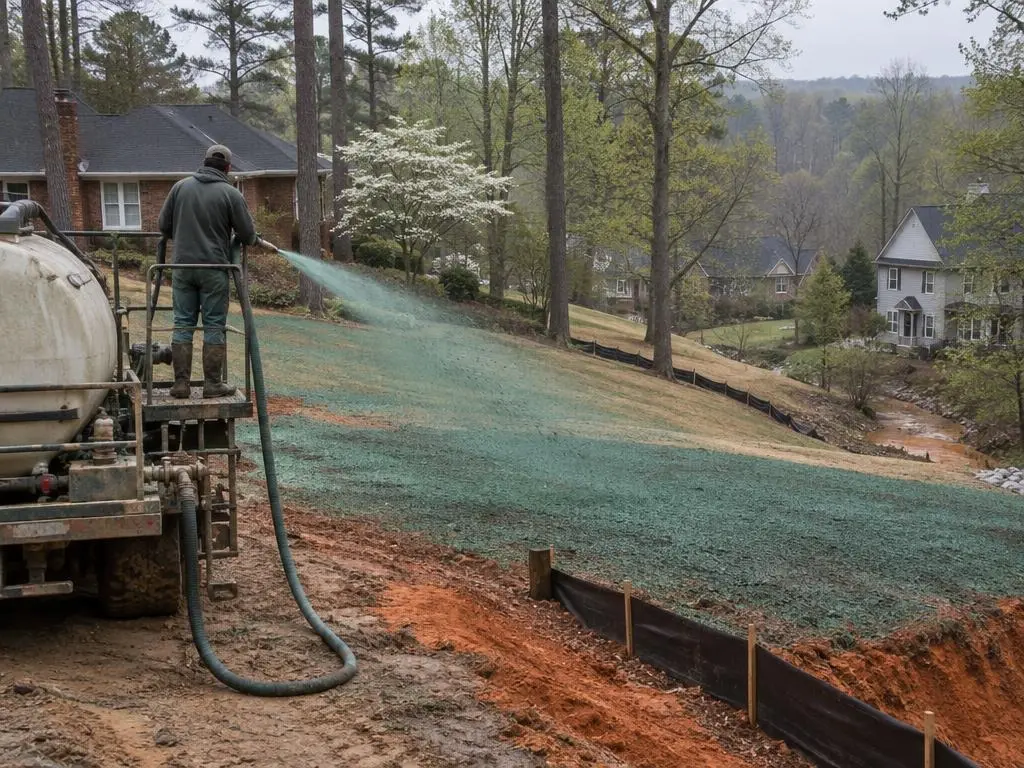
Shade lawn repair and overseeding in Atlanta brings thin, patchy grass back without starting from bare dirt. Many lawns in the metro thin out year after year, and shade from the tree canopy is the usual reason. Overseeding puts new seed into the existing lawn so it fills back in; lawn renovation goes further, clearing out weeds and dead turf and seeding most of the area again. We also repair bare spots left by tree removal, drainage work or dog runs, and we can hydroseed larger patches so the seed stays put on slopes.
Why lawns thin out here
Atlanta has one of the densest urban tree canopies in the country, with vegetation covering about 47.9 percent of the city in 2017, and that canopy spreads into the suburbs. As trees grow, lawns that were in sun when the house was built end up in shade. Bermudagrass is especially affected: it needs full sun and dense shade suppresses it. Summer heat, with highs reaching 90 degrees on an average of 47 days a year, stresses fescue, and compacted clay soil limits roots for both grasses. Foot traffic, pets and lawn equipment do the rest.
Fescue overseeding in fall
For shaded lawns, the usual answer is tall fescue. It is the most heat tolerant of the cool-season grasses and roots more deeply than the others, and it is well adapted to the transition zone the Southeast sits in. University of Tennessee Extension puts the ideal window for seeding cool-season grasses at late August to mid-October, which lines up with Atlanta's cooling September and October weather. Overseeding in that window gives new seedlings the fall and spring to establish before the next summer.
Bermudagrass lawns
Sunny bermudagrass lawns that have thinned usually recover best with warm-season timing, from about May through June, when soil is warm and the grass is actively growing above about 59 degrees. Because bermudagrass spreads by runners and rhizomes, fixing the cause of the thinning, such as shade, compaction or poor drainage, often matters as much as adding seed. If a once-sunny bermudagrass lawn is now mostly in shade, we may suggest switching that part of the yard to fescue.
Aeration and soil
Overseeding works better when seed reaches soil. Core aeration pulls plugs from compacted ground, opening space for seed, water and air. On Piedmont clay that has been packed down, aeration before overseeding makes a noticeable difference, since kaolinite clay recovers poorly from compaction on its own. Lime may be part of the plan as well, because Cecil soils are naturally strongly acid.
Repair or start over?
If most of the lawn is still healthy grass with thin areas, overseeding is usually enough. If weeds or bare soil cover more than about half of it, or if the grass type is wrong for the light, a renovation or full new lawn installation may cost less over time. We walk the yard with you and explain which way we would go and why.
Signs your lawn needs attention
- Grass thinning under trees or along the shaded side of the house
- Bare spots after tree removal, construction or drainage work
- A bermudagrass lawn that has gone patchy as the trees grew
- Soil so hard that water runs off instead of soaking in
Repair and Overseeding Options
From a fall overseed to a full lawn renovation.
Fescue overseeding
New tall fescue seed into thin, shaded lawns in the late summer and fall window.
Core aeration
Pulling plugs from compacted clay so seed, water and air reach the soil.
Bare spot repair
Loosening, amending and seeding patches left by trees, digging or traffic.
Lawn renovation
Removing weeds and dead turf and reseeding most of the yard.
Bermudagrass patching
Late spring seeding for thin areas in sunny bermudagrass lawns.
Patch hydroseeding
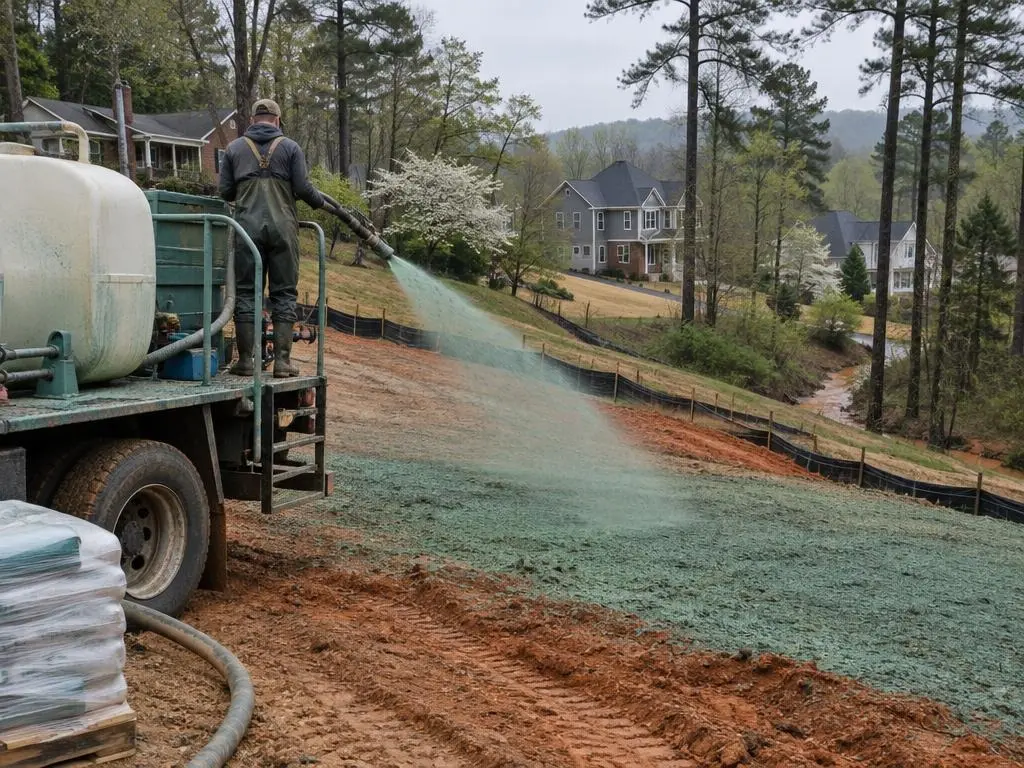
Hydroseeding larger bare areas or slopes where loose seed would wash.
Overseeding and Repair Cost Ranges
| Service | Published range |
|---|---|
| Overseeding per sq ft (Lawn Love) | $0.07 to $0.23 |
| Aerate and overseed per sq ft (Fixr) | $0.08 to $0.25 |
| Lawn aeration, typical job (HomeAdvisor) | $100 to $400 |
| Professional lawn seeding service (Angi) | $250 to $350 |
There is no reliable published price for lawn repair or renovation as a whole, so we set that once we see the yard. Use as a guide. Our written quote spells out the final cost.
How We Bring a Lawn Back
1. Diagnose
We look at light, soil, drainage and grass type to find why the lawn thinned.
2. Prepare
Aeration, dethatching or spot loosening, plus lime if the soil needs it.
3. Seed
Overseed or hydroseed with the right grass for the light and season.
4. Aftercare
Watering and mowing guidance to get new seedlings through the first weeks.
Why Choose Us for Shade Lawn Repair & Overseeding
Cause before seed
We look for why the lawn thinned so the repair lasts.
Shade-aware
We match grass type to light rather than reseeding the same failing grass.
Straight advice
We tell you when overseeding is enough and when a renovation makes more sense.
Shade Lawn Repair & Overseeding Questions
What month should I overseed a fescue lawn in Atlanta?
September into early October is the sweet spot. University of Tennessee Extension puts the ideal window for cool-season grasses at late August to mid-October, and Atlanta's cooling fall weather fits it well.
Why won't grass grow under my trees?
Most grasses need some direct sun. Bermudagrass needs full sun, and even fescue thins in deep shade. Shade-tolerant fescue, raising tree canopies to let more light in, or mulching the darkest spots are the usual options.
Should I aerate before overseeding?
On compacted Atlanta clay, yes. Aeration opens the soil so seed can reach it and roots can grow down, which clay has a hard time recovering on its own.
Is overseeding cheaper than a new lawn?
Usually, if most of the lawn is still healthy. Lawn Love's range for overseeding is between $0.07 and $0.23 a square foot. If weeds or bare soil cover most of the yard, a full new lawn may be the better value.
Shade Lawn Repair & Overseeding Service Areas
- Hydroseeding in Atlanta, GA
- Hydroseeding in Sandy Springs, GA
- Hydroseeding in Roswell, GA
- Hydroseeding in Alpharetta, GA
- Hydroseeding in Johns Creek, GA
- Hydroseeding in Milton, GA
- Hydroseeding in Marietta, GA
- Hydroseeding in Kennesaw, GA
- Hydroseeding in Acworth, GA
- Hydroseeding in Woodstock, GA
- Hydroseeding in Canton, GA
- Hydroseeding in Cumming, GA
- Hydroseeding in Suwanee, GA
- Hydroseeding in Buford, GA
- Hydroseeding in Lawrenceville, GA
- Hydroseeding in Snellville, GA
- Hydroseeding in Conyers, GA
- Hydroseeding in McDonough, GA
- Hydroseeding in Peachtree City, GA
- Hydroseeding in Fayetteville, GA
- Hydroseeding in Newnan, GA
- Hydroseeding in Douglasville, GA
- Hydroseeding in Dallas, GA
- Hydroseeding in Powder Springs, GA
Get a Shade Lawn Repair & Overseeding Estimate
Send a few photos of the thin areas and we will set up a visit.